EchoSync
AI-Powered IoT & Robotics Safety System
The Problem
Singapore’s rapidly aging population faces a critical risk of "solitary emergencies"—incidents where a fall or medical episode remains undetected for days. Existing solutions, like panic buttons and wearables, rely on user activation and are often abandoned due to stigma or forgetfulness. A proactive, non-invasive system is required to shift elderly care from reactive response to preventive protection.
The Dual-Pitch Solution
As the Technical Lead, I architected EchoSync: a zero-stigma, PDPA-compliant safety system that uses acoustic, thermal, and pressure sensors hidden within standard ceiling lights to detect emergencies without optical cameras. This core technology was successfully adapted into two distinct, high-impact proposals:
- Chua Thian Poh Pinnacle Prize (AI For Good & Smart Cities): Focused on community well-being, utilizing predictive analytics to detect early signs of health decline in seniors living alone.
- SCDF x Dell Challenge: Integrated the IoT network with "EchoRover"—an autonomous patrol robot carrying an AED that navigates to the unit to provide immediate support before paramedics arrive.
Core Architecture
- > Sensor Fusion: Fuses thermal imaging (posture) with acoustic sensors (decibel spikes) to detect falls.
- > Privacy-First AI: ML/NLP algorithms process data signatures at the edge. No raw audio or video is ever stored.
- > Robotics Integration: Autonomous navigation logic for the EchoRover to assist SCDF dispatch workflows.
- > API Triggers: Integrates SP Group API to flag abnormal drops in utility usage.
Multi-Layer Filter Snippet
# Conceptual Logic: Reducing False Positives via Sensor Fusion
def analyze_incident(acoustic_data, thermal_data):
    is_impact = ml_model.detect_thud(acoustic_data)
    is_floor_level = cv_model.verify_posture(thermal_data)

    if is_impact and is_floor_level:
        return trigger_critical_alert()
    elif is_impact and not is_floor_level:
        return log_dropped_object() # Prevents false SCDF dispatch
    else:
        return SystemStatus.NORMAL
The EchoSync Ecosystem
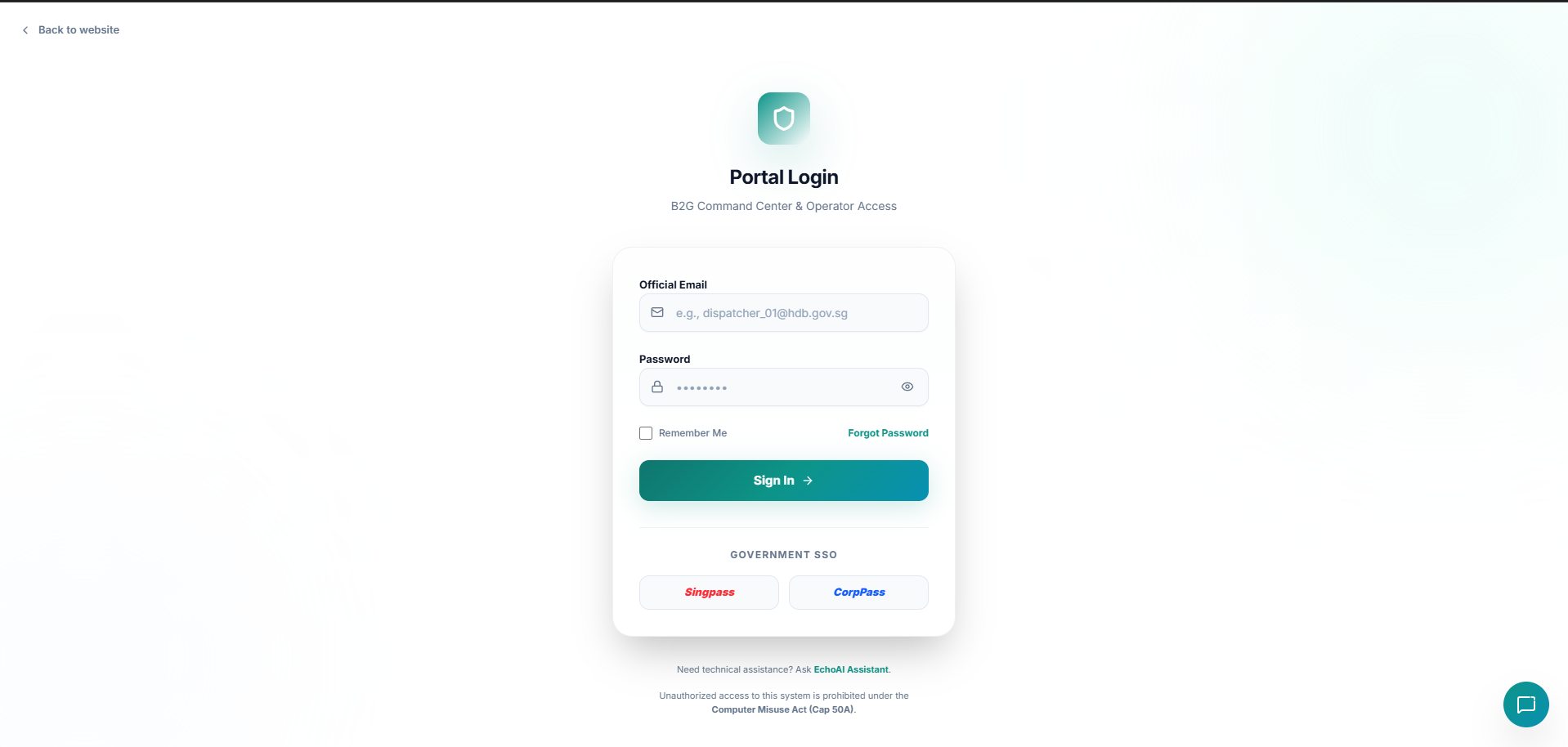
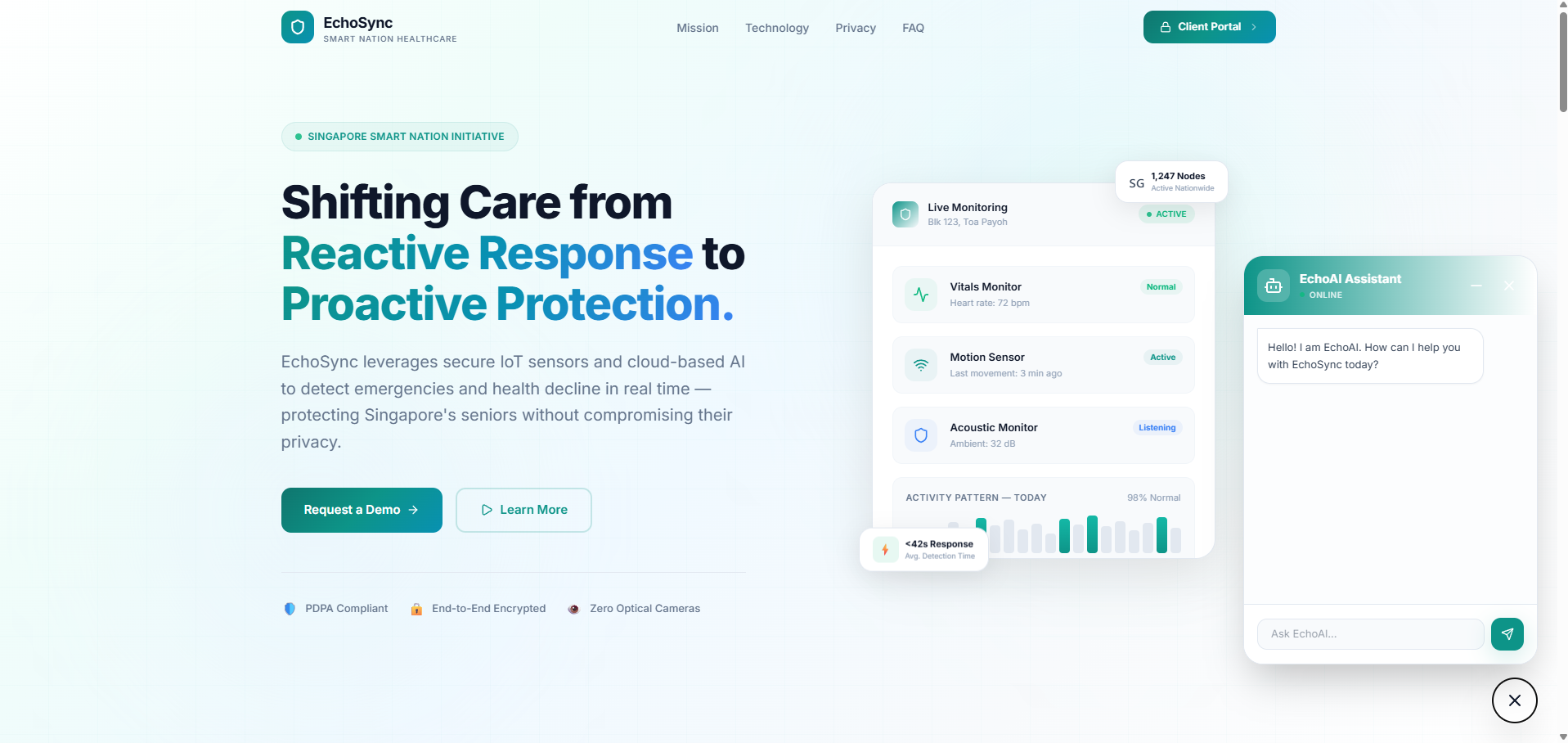
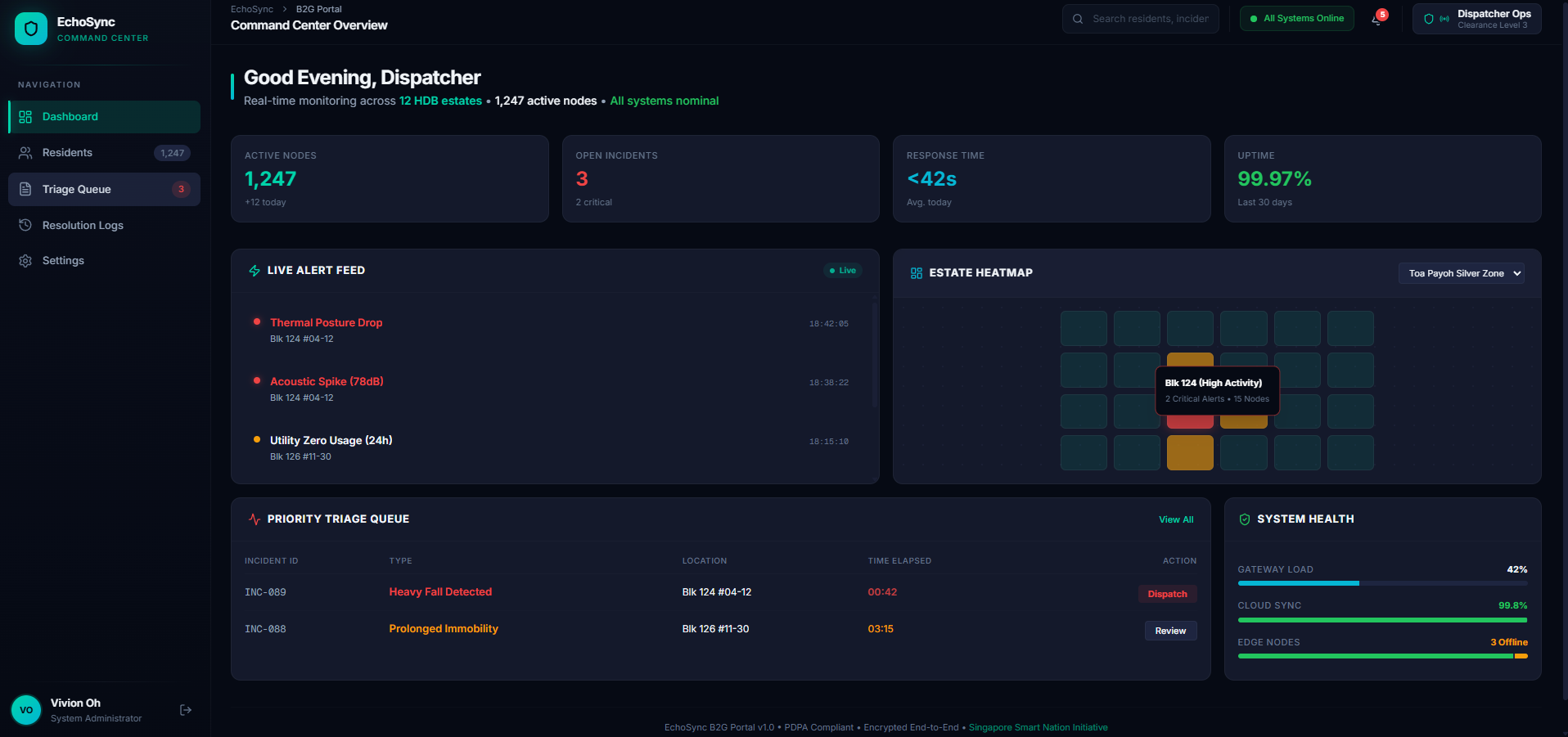
EchoSync is designed as a dual-layer platform. I rapidly prototyped the entire ecosystem utilizing AI-assisted workflows (Claude Opus), balancing public transparency with secure governmental operations.
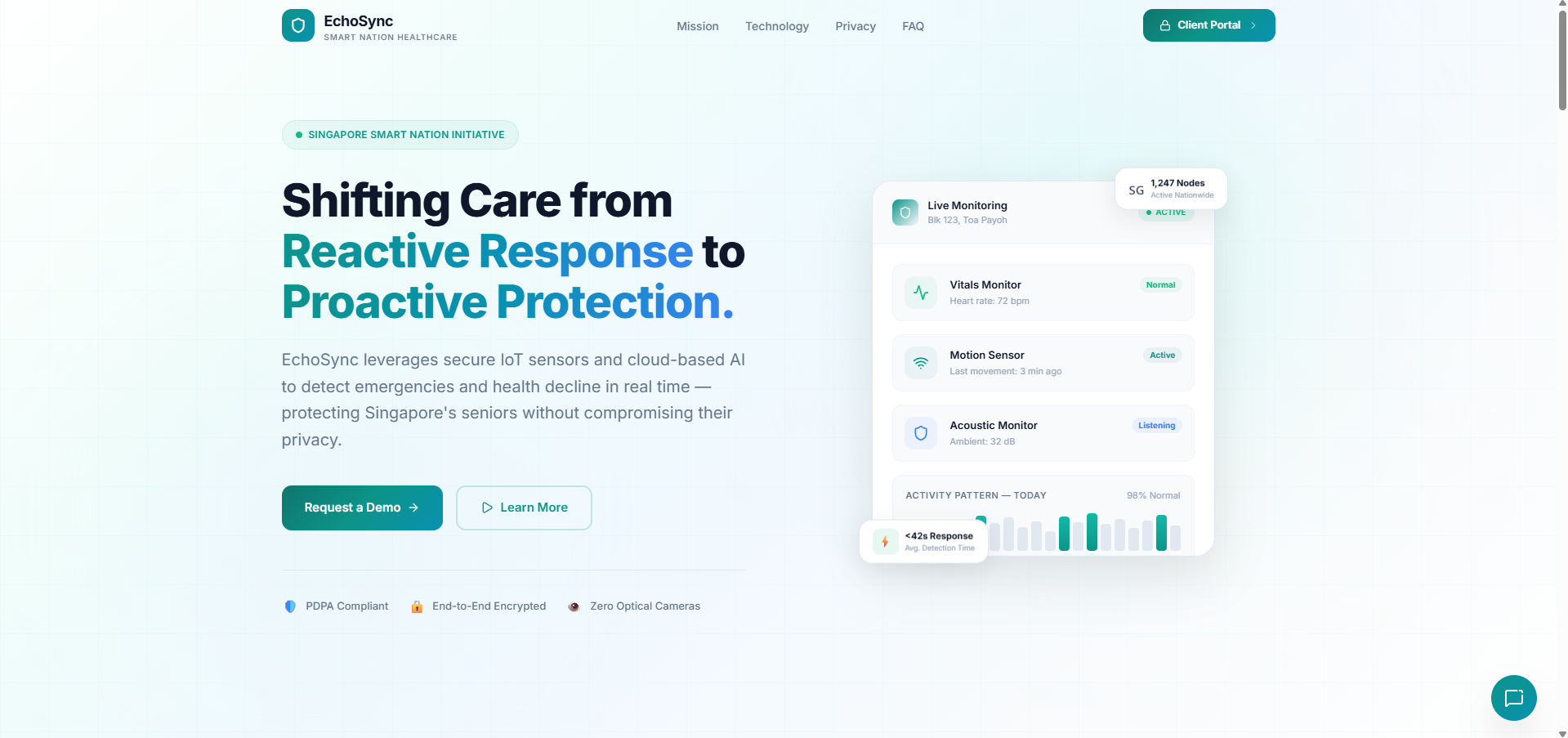
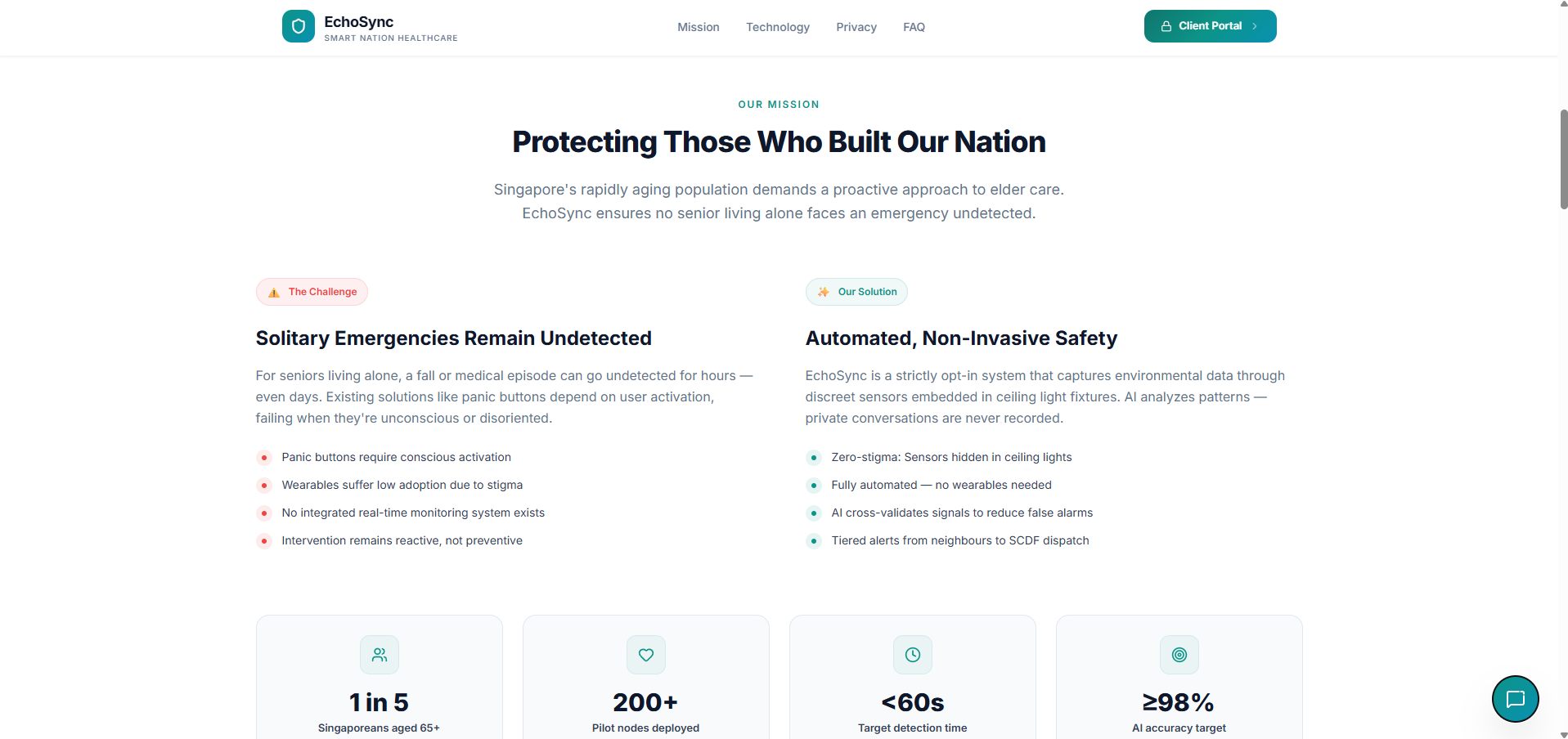
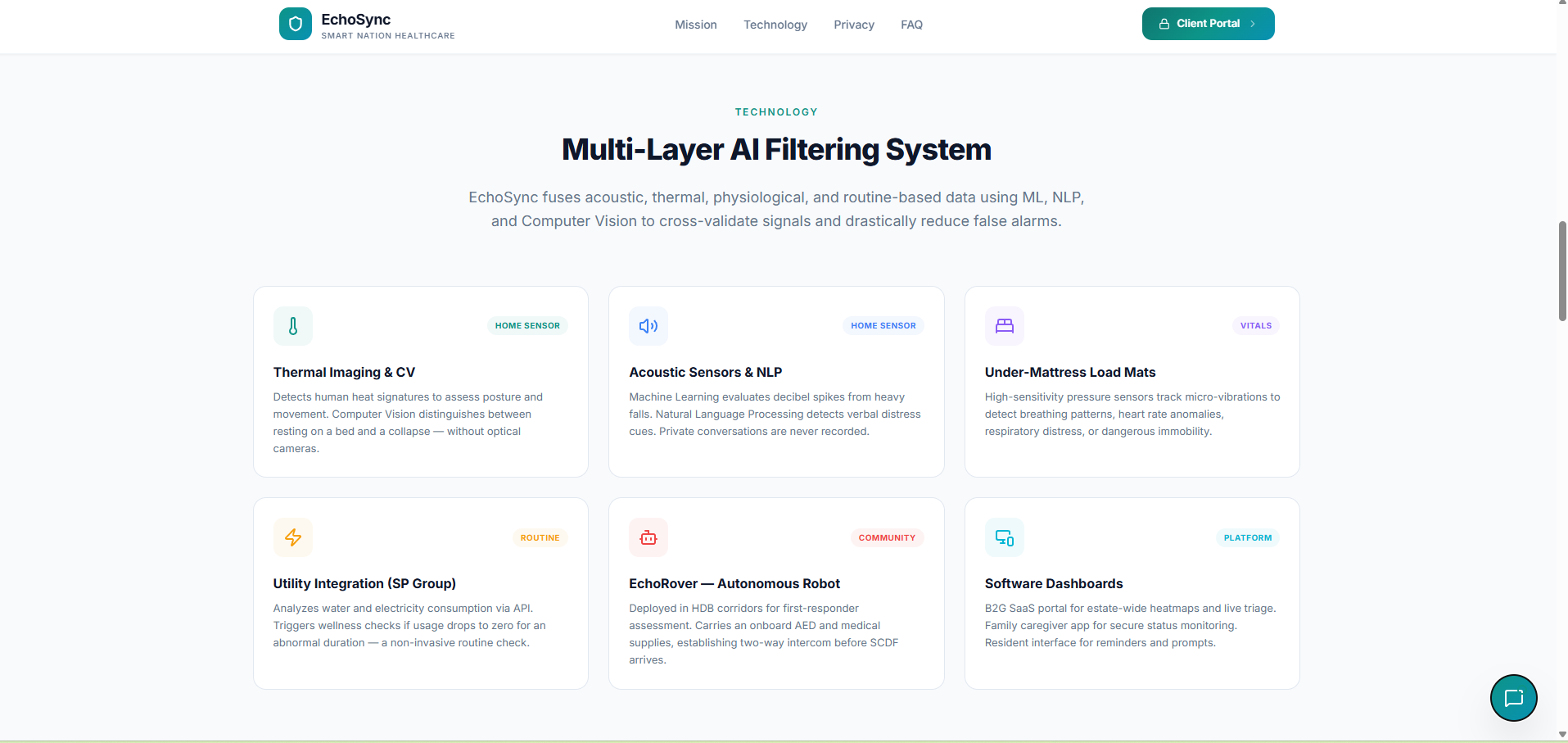
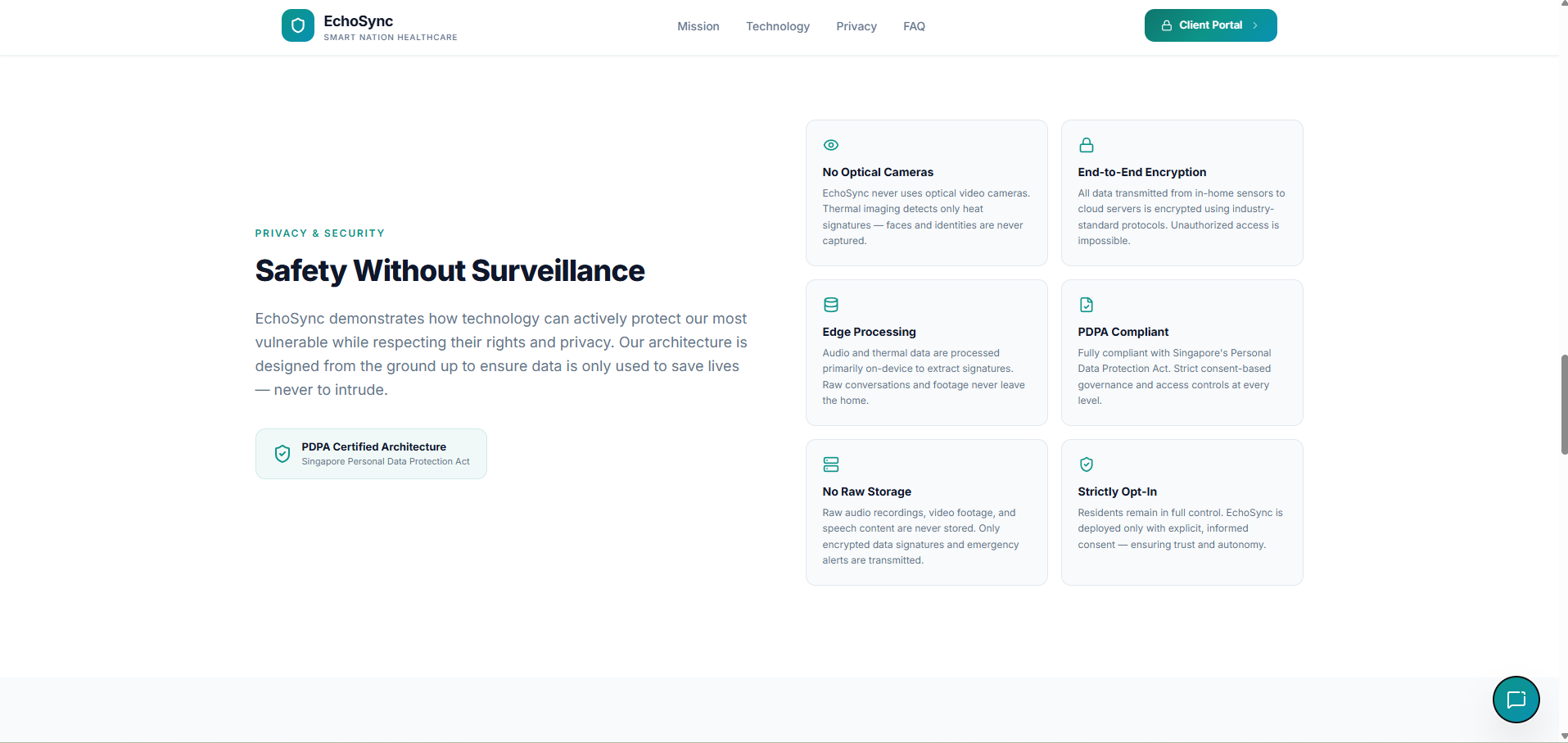
Tech Stack
Role
Technical Lead (AI & Robotics)
Status
Transitioned from concept to active prototyping. Currently developing the B2G enterprise portal and web interface utilizing AI-assisted workflows (Claude Opus).
Links
View the early-stage B2G portal development and system architecture on GitHub.
Source Code