EchoSync
Pre-Arrival Emergency Intelligence
Project Overview
EchoSync is a privacy-first, AI-assisted pre-arrival intelligence and first response ecosystem designed to help detect unwitnessed home emergencies before help is requested. It connects sensor-based detection, Edge AI verification, caregiver support, an SCDF-style dashboard, and a myResponder-style response flow.
The project was developed for the SCDF and Dell Lifesavers’ Innovation Challenge 2026, where EchoSync was selected as a Top 5 Finalist out of 81 teams from 17 institutions.
The Problem
In unwitnessed home emergencies, the most dangerous gap happens before the 995 call exists. Seniors living alone may experience a fall, collapse, or medical distress with no bystander nearby and no one able to call for help.
Existing solutions such as panic buttons and wearables can help, but they still depend on the resident being conscious, able to move, and able to activate the device. EchoSync addresses this first-alert gap by detecting possible distress earlier and verifying it before escalation.
The Dual-Pitch Solution
EchoSync was adapted for two proposal directions while keeping the same core idea: privacy-first emergency detection and safer community response.
- SCDF x Dell Innovation Challenge: Built a connected emergency response prototype with a SCDF-style dashboard, caregiver verification app, myResponder-style flow, multilingual voice check-in, risk scoring, and sensor-based alert detection.
- NTU Pinnacle Prize: Adapted the concept for Smart City elderly care and non-invasive health monitoring, focusing on privacy-first detection, explainable alerts, and preventive community response.
Prototype Architecture
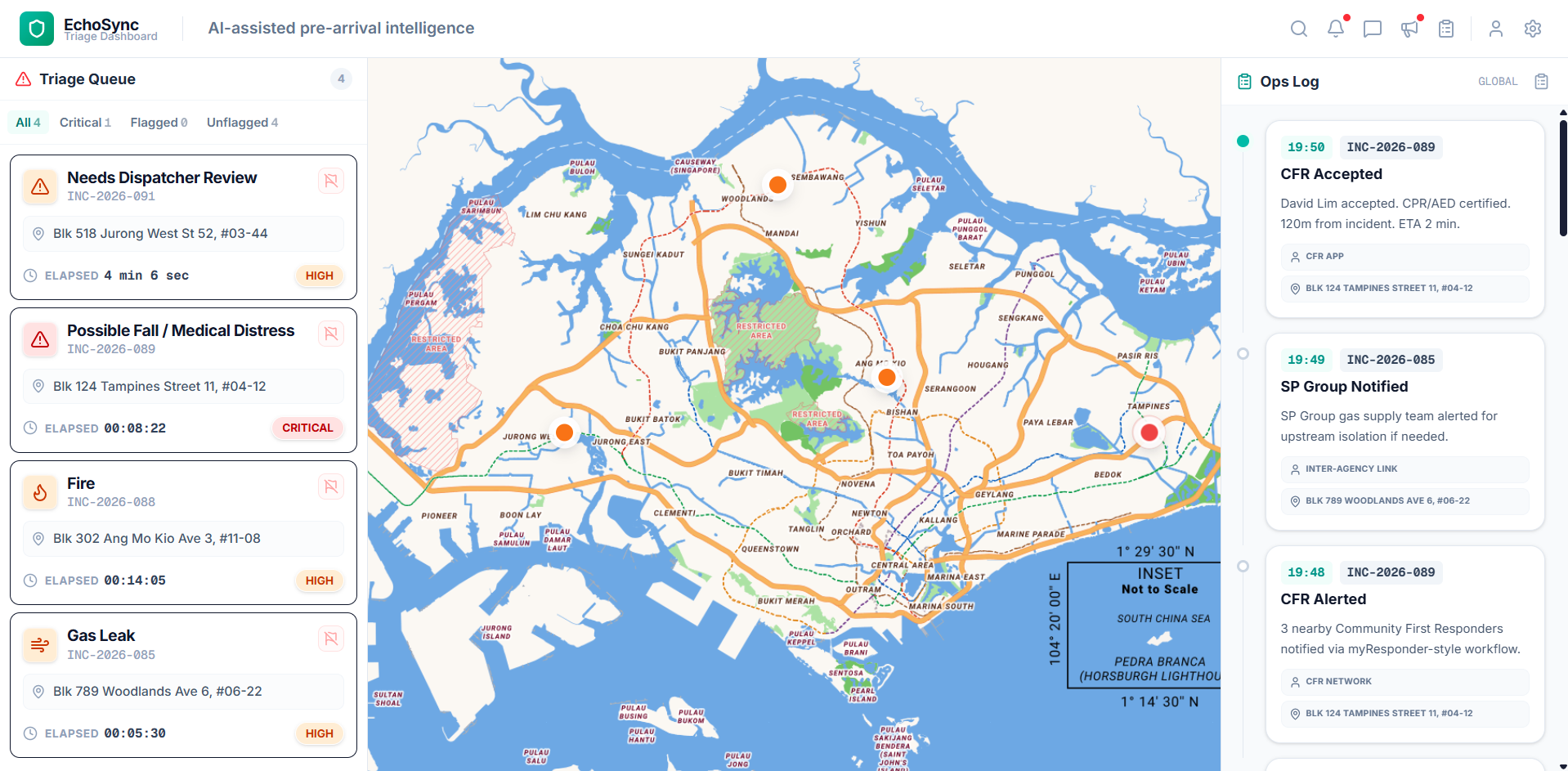
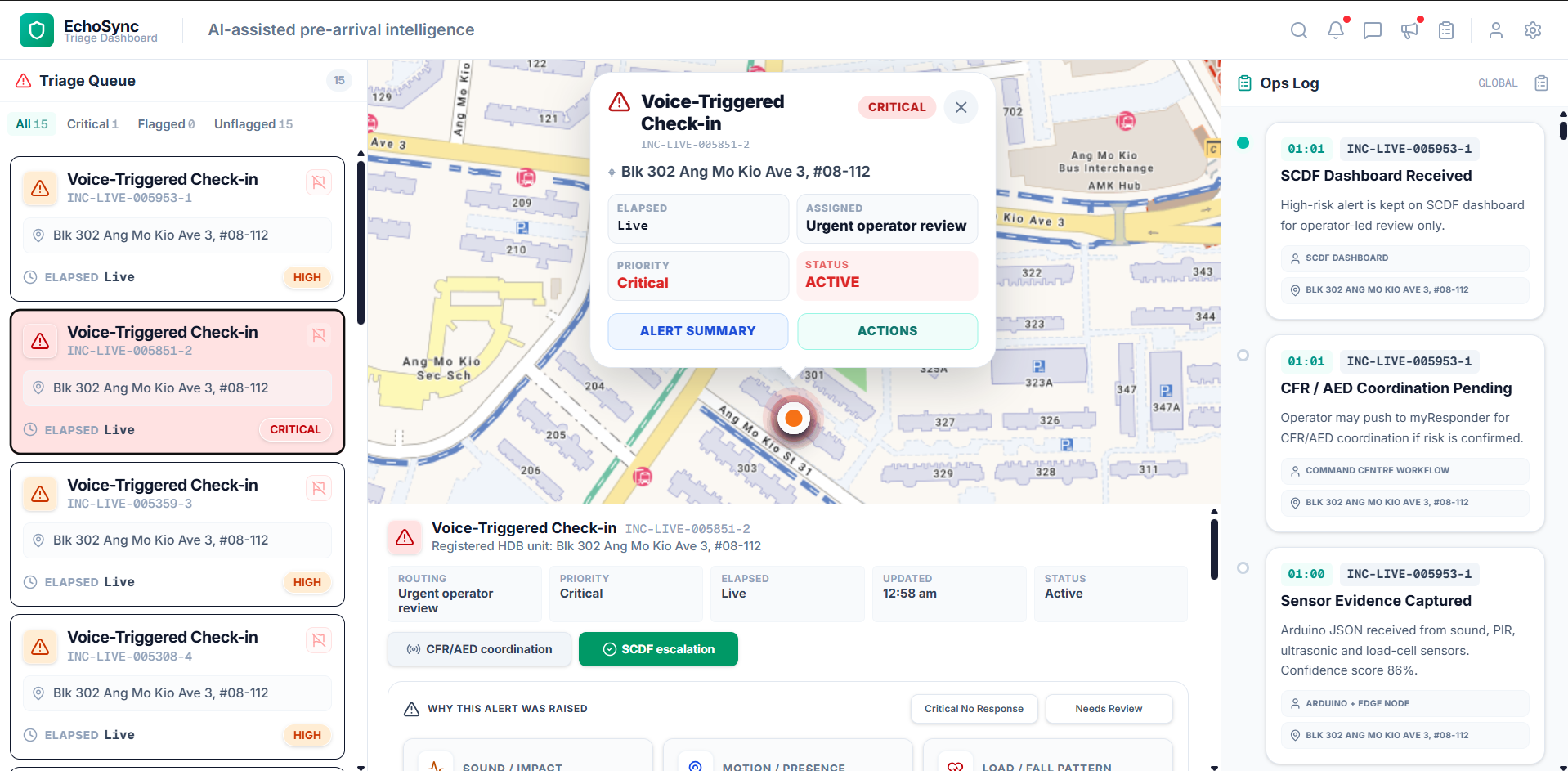
- > SCDF-style Dashboard: Displays high and critical alerts, map-based incidents, confidence score, AI summary, sensor evidence, and operator actions.
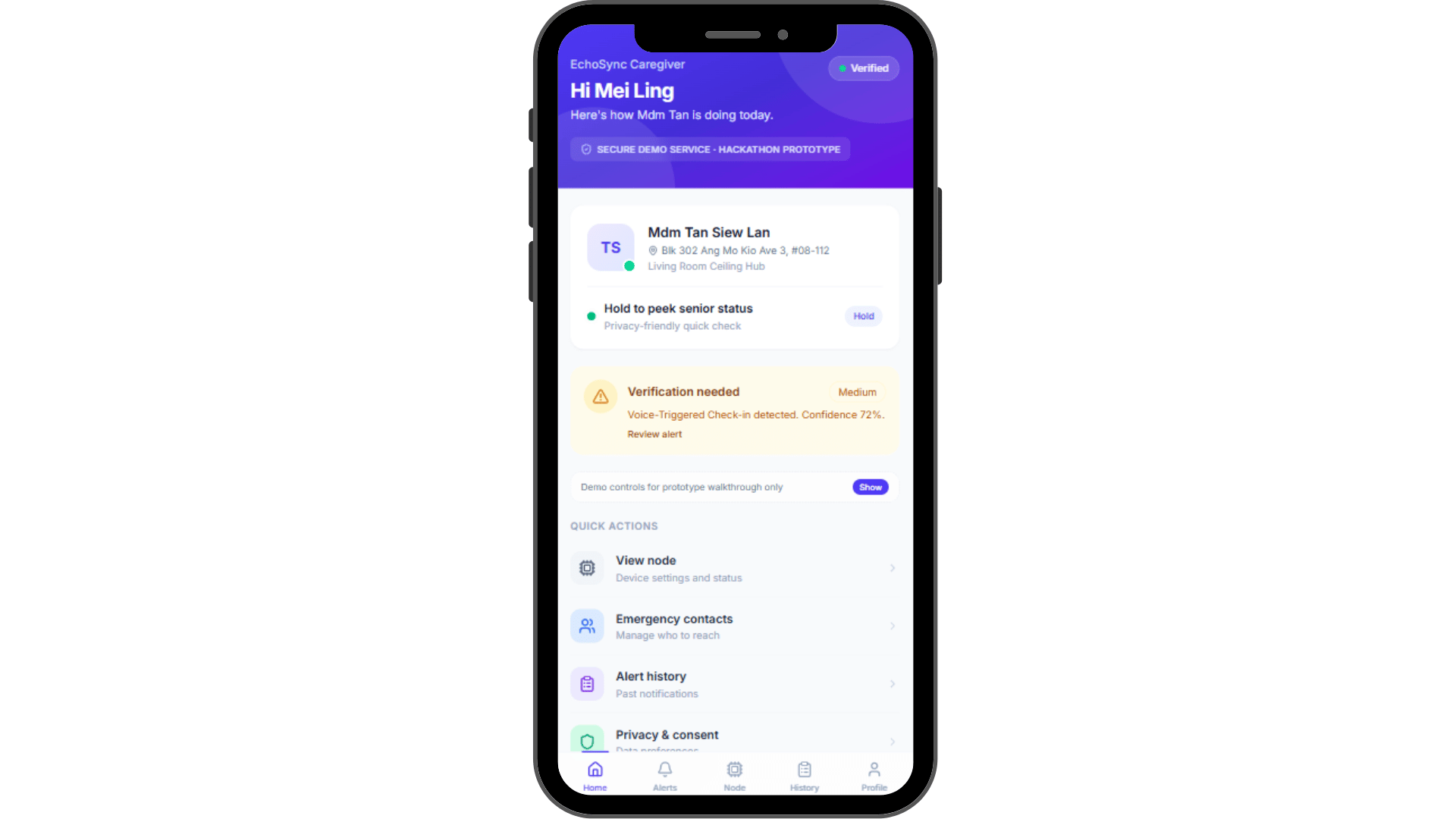
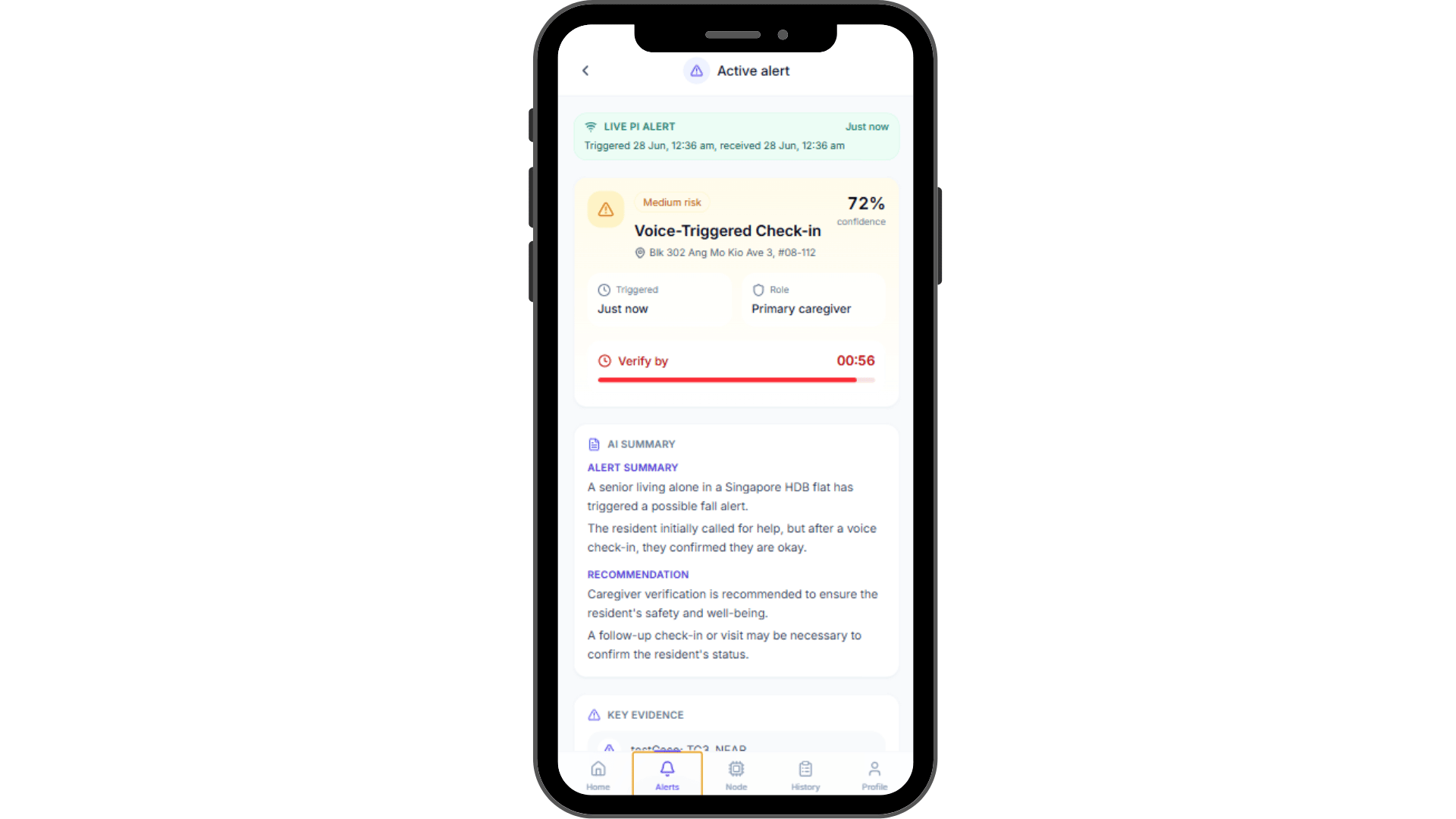
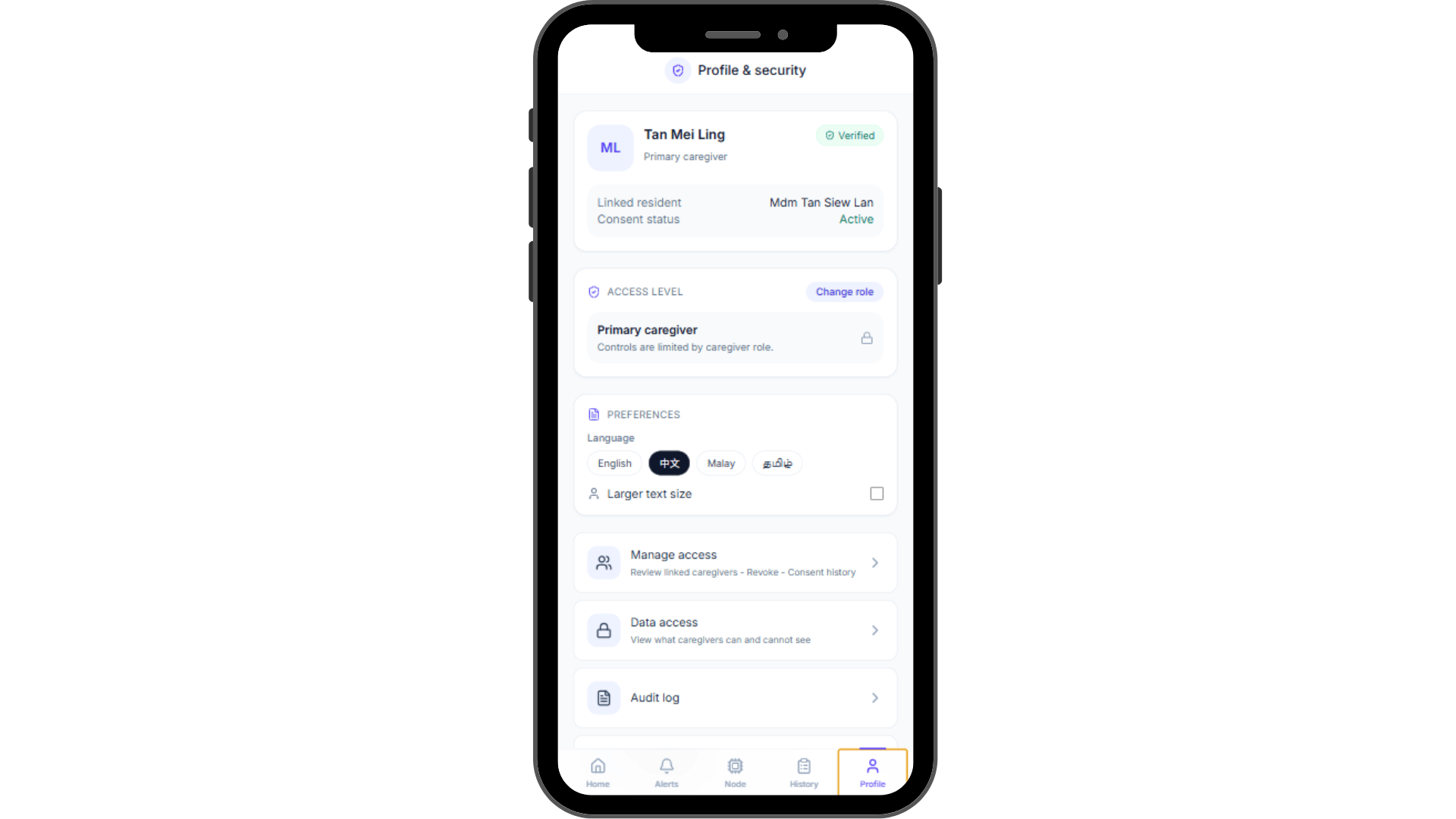
- > Caregiver App: Handles low and medium risk verification, caregiver context submission, node status, alert history, and multilingual preferences.
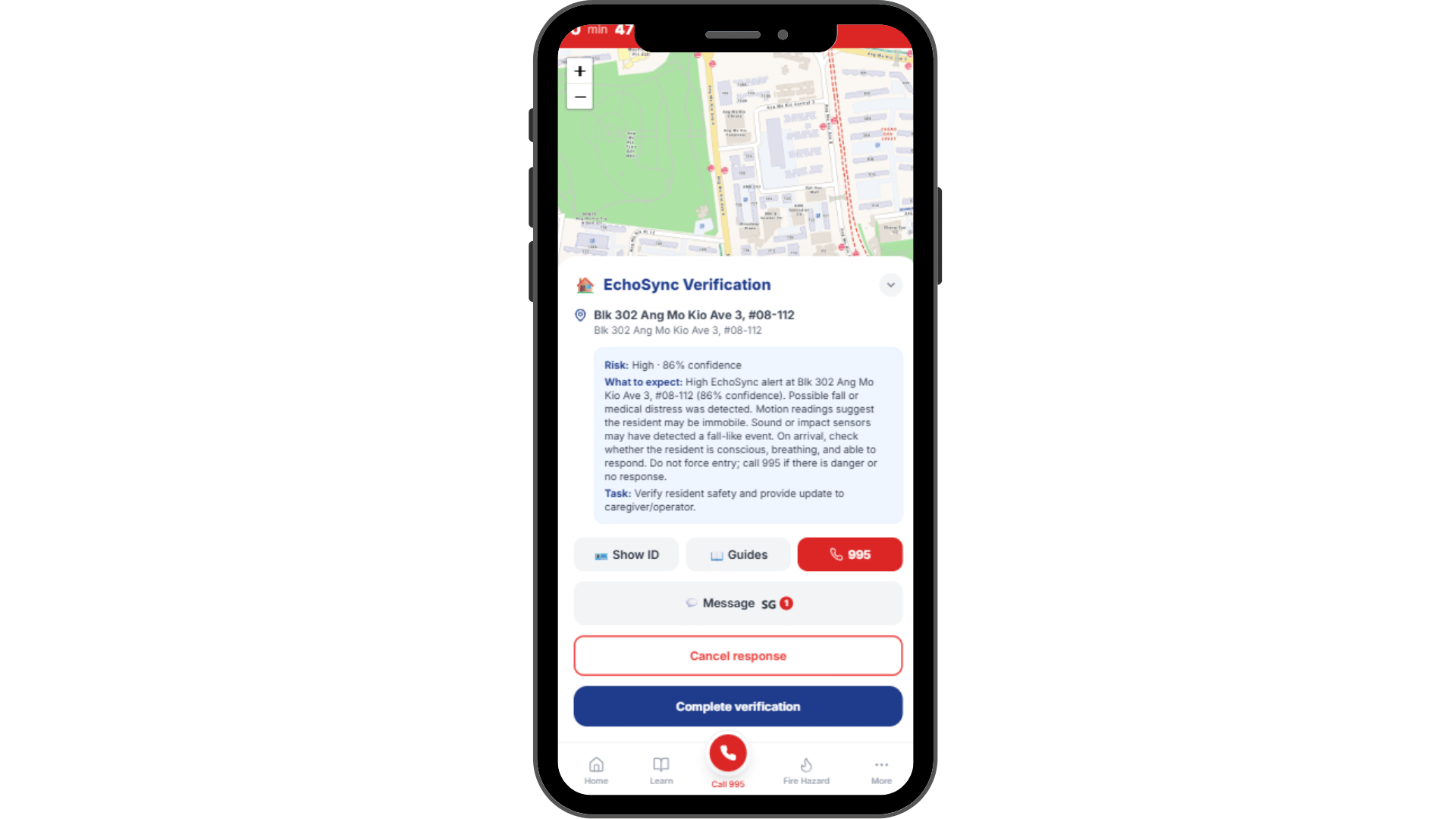
- > myResponder-style Flow: Demonstrates responder task acceptance, map guidance, active response, and completion logging after operator approval.
- > Sensor Prototype: Uses Raspberry Pi / Arduino signals such as sound, motion, ultrasonic distance, load cell readings, and voice check-in results.
- > Human-in-the-loop: AI supports triage and explanation, while caregivers and SCDF-style operators remain involved before escalation.
My Contributions
My contributions included UI/UX design, React.js frontend development, dashboard integration, alert flow design, prototype testing, hardware demo support, and pitch preparation. I worked on translating raw sensor events into clear alert cards, risk levels, caregiver actions, dashboard evidence, and responder workflows.
I also helped refine the final demo journey across the SCDF dashboard, caregiver application, myResponder-style flow, and hardware-triggered alert scenarios.
End-to-End Walkthrough
Watch the complete EchoSync response journey across the SCDF-style dashboard, caregiver application, and myResponder-style workflow. The walkthrough demonstrates alert review, caregiver verification, escalation, responder task handling, and case completion.
The EchoSync Ecosystem
The final prototype demonstrates an end-to-end emergency response journey: sensor detection, Edge AI verification, caregiver verification, SCDF-style operator review, and myResponder-style escalation.